About the author
Anna Röll

Testicular pain is a sensitive issue – quite literally. Many men feel unsure or worried when they experience pulling, pressure, or stabbing sensations in the testicular area. The causes can vary widely, ranging from harmless irritation to serious medical conditions. One possible cause is sexually transmitted infections (STIs).
In this article, you’ll learn which STIs can cause testicular pain, how to recognize them, when to seek medical help, and how to protect yourself.
Testicular pain refers to uncomfortable or painful sensations in the testicle itself or the surrounding area, such as the epididymis or spermatic cord. It may be acute (sudden onset) or chronic (lasting for weeks or months). The intensity can range from a mild pulling sensation to severe, stabbing pain.
Yes – especially bacterial infections like chlamydia or gonorrhoea can lead to testicular pain, particularly if left untreated. In such cases, the infection can spread to internal structures within the scrotum, leading to inflammation of the epididymis (epididymitis), the testicle itself (orchitis), or both (epididymo-orchitis). Less commonly, late-stage syphilis can also affect the testicular area and trigger similar inflammatory processes if the infection remains untreated for a long time (Cleveland Clinic, 2023).
| STI | Possible Complication | Typical Symptoms |
|---|---|---|
| Chlamydia | Epididymitis (inflammation of epididymis) | Burning sensation when urinating, discharge, testicular pain |
| Gonorrhoea | Epididymitis | Purulent discharge, painful urination, swelling, testicular pain |
| Syphilis(rare) | Testicular or epididymal inflammation in late stages | Painless ulcers, skin rash, possibly testicular pain |
Viral infections such as herpes or HIV usually do not cause direct testicular pain but can lead to other genital symptoms (Cleveland Clinic, 2023).
Sexually transmitted infections (STIs) in men often present with various symptoms affecting the genital or urinary tract. The most common signs include:
Burning or pain when urinating
Unusual penile discharge (clear, whitish, or purulent)
Redness, itching, or swelling in the genital area or scrotum
Tenderness or pain in the epididymis or testicle
Fever or a general feeling of illness
Swollen lymph nodes in the groin
Important: Many STIs begin without noticeable symptoms and often go undetected. In fact, up to 50% of men with chlamydia show no symptoms at all, even though they are contagious (American Society of Microbiology, 2022; NHS, 2024).
Not all testicular pain is caused by an STI. Other possible causes include:
Epididymitis due to a urinary tract infection
Prostatitis (inflammation of the prostate)
Testicular torsion (twisting of the testicle – a medical emergency!)
Inguinal hernia
Hydrocele or varicocele (varicose veins in the scrotum)
Injuries or trauma
Testicular tumor (rare and usually painless)
Testicular torsion requires immediate medical attention: it can block blood flow to the testicle and must be surgically treated within hours to prevent permanent damage (Mayo Clinic, 2023).
Seek urgent medical care if:
The pain starts suddenly and is severe
The testicle is red, swollen, or feels warm to the touch
Fever or chills are present
There is discharge or blood in the urine
Symptoms persist for more than a few days
Source: Mayo Clinic, 2023
Depending on the symptoms, STIs in men are diagnosed using various tests. This typically includes a urine sample or a urethral swab, especially for chlamydia and gonorrhoea. Blood tests are used to detect infections like syphilis, HIV, or hepatitis. If testicular pain is present, an ultrasound may also be needed to evaluate inflammation or rule out other causes (Cleveland Clinic, 2023).
Prevention is key to maintaining your sexual health:
✔️ Use condoms – they significantly reduce the risk, even if they don’t prevent all infections
✔️ Get tested regularly – especially with new or multiple partners, or after unprotected sex
✔️ Communicate openly with partners – shared testing and honest conversations lower the risk
✔️ Clean sex toys thoroughly – after every use or avoid sharing
✔️ Get vaccinated – e.g. against HPV and hepatitis B
✔️ Avoid self-medicating – always consult a healthcare provider about symptoms
Source: CDC, 2024
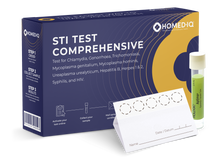
Not sure if your symptoms are related to an STI? With a home STI test kit from Homed-IQ, you can discreetly and easily check for infections. The kit includes everything needed for sample collection, and your sample is analyzed anonymously in a certified lab. You’ll receive your results digitally and with full data privacy.
At-home testing with laboratory accuracy
Our medical laboratories operate according to strict European quality standards. All tests are analysed by ISO-certified partner labs, giving you reliable and professional results. With the comfort of your home.